Pickleball Rules for Beginners
Everything a brand-new player needs to step on court with confidence.
7 min read

Pickleball is one of the fastest-growing sports in the country, and it's easy to see why. It combines elements of tennis, badminton, and ping-pong into a game that's simple to learn, easy on the body, and a lot of fun from your very first rally. Whether you're heading to your local court for the first time or just want to understand the game before you play, here's everything a beginner needs to know about how pickleball works.
The Court and Equipment
A pickleball court is about the size of a badminton court — 20 feet wide and 44 feet long, which is much smaller than a tennis court. This is part of what makes pickleball so approachable: less ground to cover means shorter, more manageable rallies for players of any age or fitness level. The court is divided by a net that sits 36 inches high at the sidelines and 34 inches in the middle.
Equipment is simple too. Each player uses a solid paddle, roughly the size of a large ping-pong paddle, and the ball is a lightweight plastic ball with holes in it, similar to a wiffle ball. That's it — no strings to tension, no rackets to restring.
Scoring Basics
Pickleball scoring trips up nearly every beginner at first, so it's worth taking slowly. Games are usually played to 11 points, and you must win by at least 2 points. Only the serving team can score a point — if the receiving team wins the rally, no one scores, but the serve simply passes to the other team.
In doubles (the most common way to play), each team has two players, and the score is called out as three numbers: your team's score, the opposing team's score, and which server you are (1 or 2). For example, "4-2-1" means your team has 4 points, the other team has 2, and you're the first server for your team. This third number matters because, except at the very start of the game, both players on a team get a chance to serve before the serve passes to the other team.
Serving Rules
Serves in pickleball must be made underhand, with the paddle contacting the ball below waist level. You serve diagonally, aiming for the opposite service box, just like in tennis. The serve must clear the net and land within the correct service box — if it lands in the kitchen (more on that below) or out of bounds, it's a fault, and the serve passes to the other team.
At the start of a game, only one player serves before the serve switches sides (this is called a "start with one server" rule). After that, both players on a team serve in turn before the other team gets the ball.
The Two-Bounce Rule
This is one of the rules that makes pickleball feel different from tennis, and it's essential for beginners to understand. After the ball is served, the receiving team must let it bounce once before returning it. Then, the serving team must also let that return bounce once before hitting it back. Only after this "two-bounce rule" has been satisfied can players start volleying the ball out of the air.
This rule slows the game down just enough at the start of each point to create longer, more strategic rallies, and it prevents the serving team from rushing the net and smashing the return before the receiving team has a fair chance to set up.
The Kitchen (Non-Volley Zone)
The "kitchen" is the nickname for the non-volley zone, a 7-foot area on both sides of the net. Players are not allowed to volley the ball (hit it out of the air without a bounce) while standing inside this zone. You can step into the kitchen to hit a ball that has bounced, but you must step back out before volleying again.
This rule exists to prevent players from camping right at the net and smashing every ball down at their opponents, which would make the game far less balanced. It's one of the most important rules to internalize early, since stepping into the kitchen and volleying — even by accident, even if your momentum carries you in after the shot — results in a fault.
Faults
A fault ends the rally and either costs the serving team their serve or gives the receiving team a point, depending on who committed it. Common faults include:
- Hitting the ball out of bounds
- Hitting the ball into the net
- Volleying while standing in the kitchen
- Stepping into the kitchen to volley, even if the ball is played correctly
- Failing to honor the two-bounce rule
- A serve that doesn't land in the correct service box
Understanding faults early will save you a lot of confusion in your first few games, since much of pickleball strategy revolves around avoiding them while pressuring your opponents into committing one.
Basic Etiquette
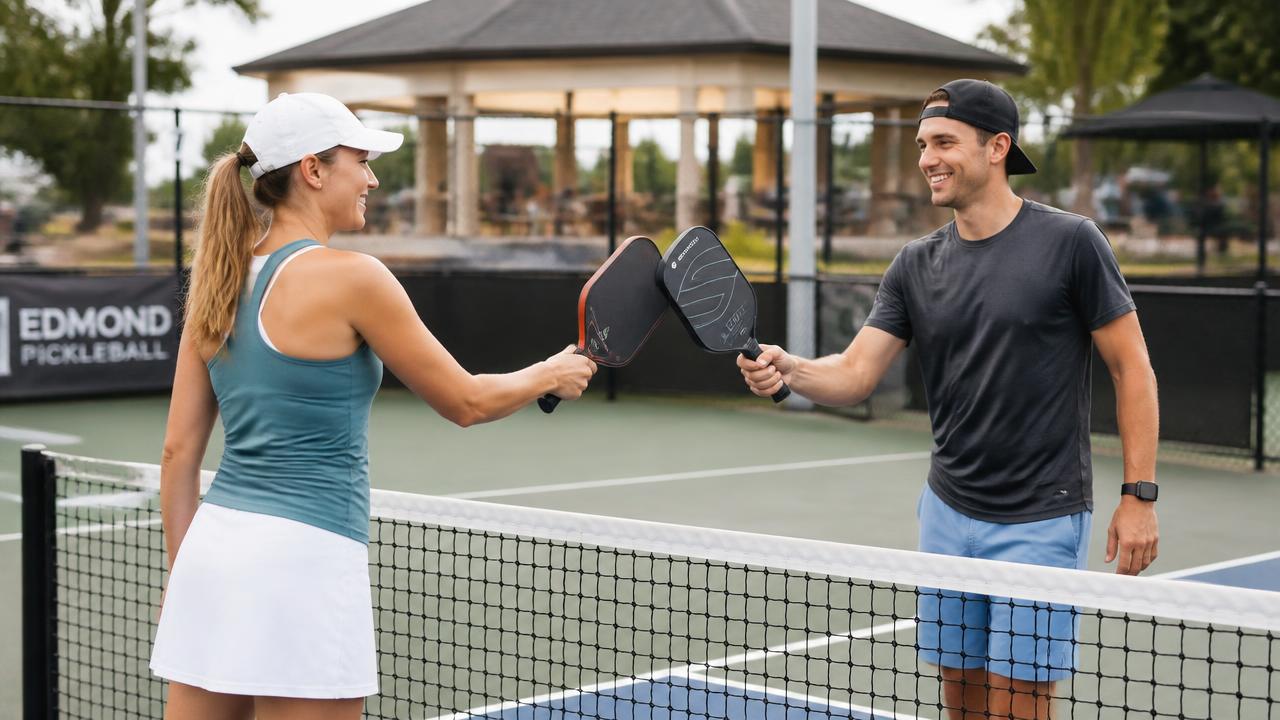
Beyond the official rules, pickleball has a friendly, community-driven culture. A few basics: call the score loudly before you serve so everyone is on the same page, make line calls honestly (most casual games are self-officiated), and if you're unsure whether a ball was in or out, the benefit of the doubt typically goes to your opponent. Between points, a quick paddle tap at the net is common after a good game, especially in casual or social play.
Getting Started
The best way to learn pickleball is simply to play. The rules will feel like second nature after just a handful of games, and most pickleball communities are especially welcoming to newcomers. Focus first on understanding the two-bounce rule and the kitchen — these two rules shape almost every strategic decision in the game — and the rest will come naturally as you get reps in. Grab a paddle, find a local court or community group, and jump in. You'll be rallying with confidence in no time.